
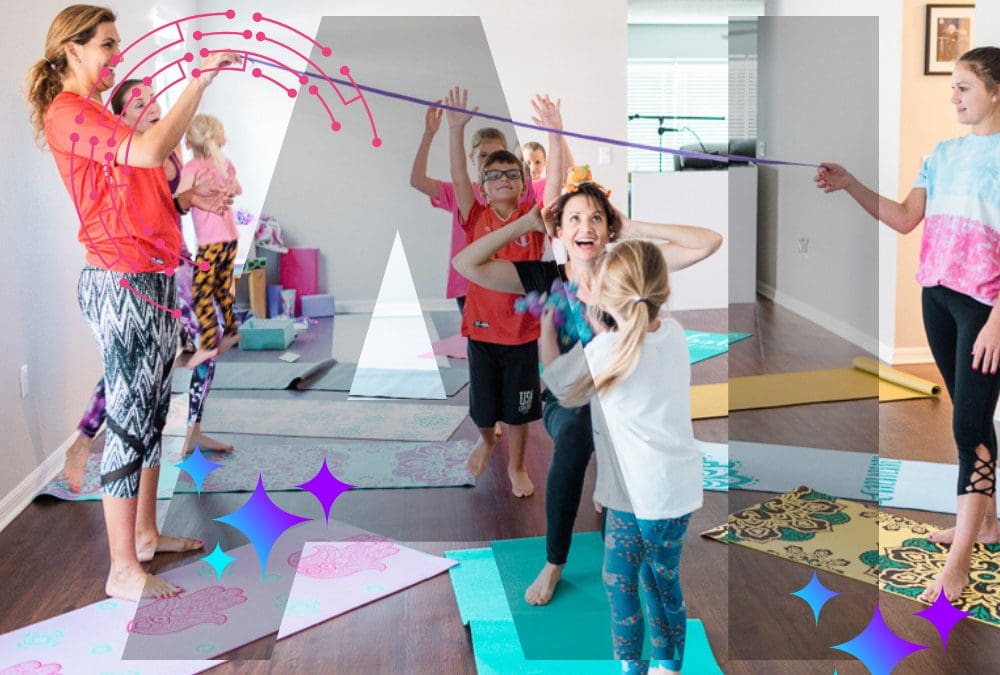
Lately, I’ve been hearing more and more teachers say: “I use AI to create my Kids Yoga classes.”
And honestly? I get it.
We’re busy. We’re juggling a lot. And having a tool that can quickly generate ideas, themes, and class outlines can feel like a lifesaver.
But this shift has also brought up something important: What actually makes a kids yoga class meaningful?
AI can be incredibly helpful. It can:
- Generate creative themes
- Suggest poses and activities
- Help organize a class flow
- Save you time when you’re feeling stuck
And those things matter.
But teaching kids yoga goes far beyond what’s written on a page—the real work happens in the room. No class ever goes exactly as planned. Kids come in with different moods, energy levels, needs, and emotions, and those can change minute by minute.
A great kids yoga teacher knows how to:
- Pivot when attention is lost
- Slow things down when a child is overwhelmed
- Bring energy up when the group needs it
- Turn unexpected moments into meaningful ones
That kind of awareness doesn’t come from a generated plan. It comes from experience, training, and connection.
Foundational Training Still Matters
Having access to ideas is one thing. Knowing how to use them is another. A strong kids yoga training helps you:
- Understand child development
- Respond to behavior with confidence
- Create a safe, inclusive environment
- Teach with intention—not just activity
Because kids yoga isn’t just about keeping children busy. It’s about helping them feel seen, supported, and empowered—while gently introducing the traditions and philosophy of yoga in a way they can understand and experience.
Where Does AI Fit In?
AI isn’t the problem. It’s how we use it.
When used well, it can:
- Spark creativity
- Support planning
- Give you a starting point
But the most impactful classes happen when you take those ideas and make them your own—through your voice, your energy, and your connection with the kids in front of you.
Kids might not be able to explain it, but they feel the difference between a teacher who is reading from a plan and one who is fully present, engaged and connected.
That connection is what keeps them coming back.
That’s what builds trust.
That’s what makes the experience stick.
So, we don’t need to choose between using tools and being great teachers. We can do both. Use AI to support you—but don’t skip the foundation that allows you to truly lead, adapt, and connect.
Because at the end of the day, it’s not the plan that makes the class powerful. It’s the person leading it.

